Wine spills happen fast. Whether you've knocked over a glass at dinner or discovered a stain on your favorite blouse, knowing how to remove wine stains can mean the difference between a permanent mark and a spotless garment. The good news: most wine stains respond well to simple household solutions when you act quickly and use the right method for your fabric type.
This guide covers everything from immediate blotting techniques to specialized treatments for dried stains, carpet, and delicate fabrics.
Act Fast: Immediate Steps for Fresh Wine Stains
The first few minutes after a wine spill are critical. Fresh wine stains are far easier to remove than dried ones because the wine hasn't had time to bond with the fabric fibers.
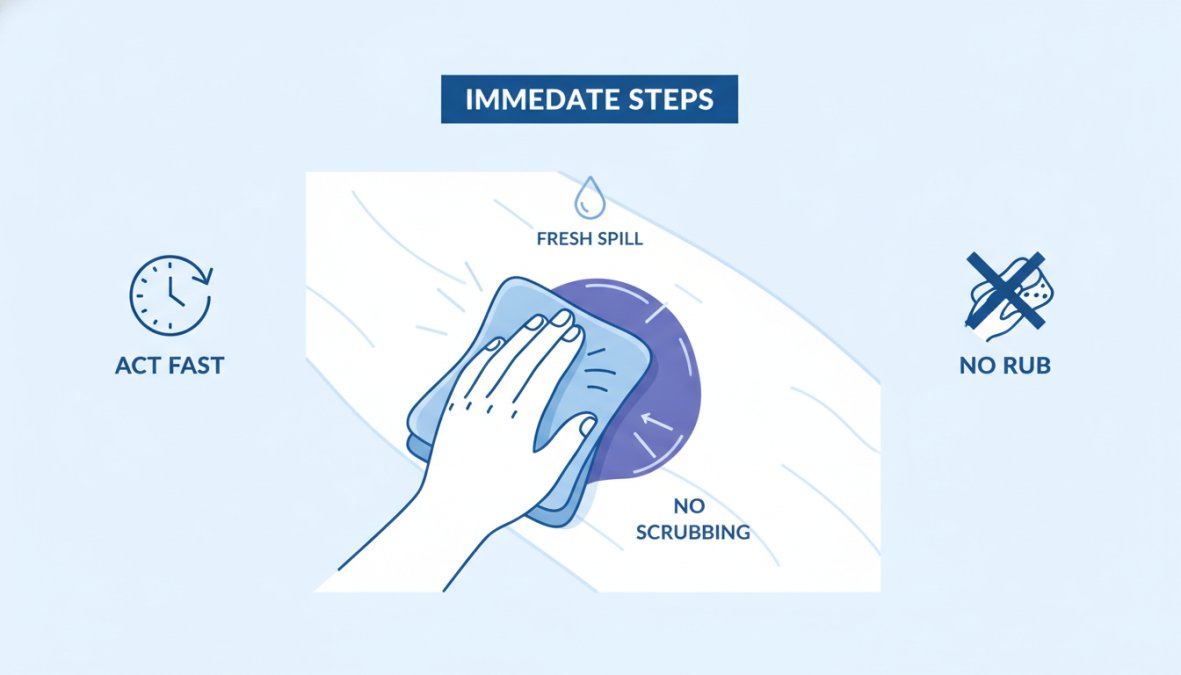
Blotting — not scrubbing — is the correct technique for a fresh wine spill.
Blotting vs. Scrubbing: Why Method Matters
Blotting is the correct technique. Scrubbing pushes the wine deeper into the fabric and spreads the stain across a larger area. Use a clean, white absorbent cloth and press it firmly onto the stain for several seconds. Repeat with fresh cloth sections until no more wine transfers.
Never scrub or rub the stain. Scrubbing drives the wine deeper into fabric fibers and spreads it across a wider area, making removal much harder.
Best Wine Stain Remover Methods That Actually Work
Several household solutions effectively remove wine stains. The method you choose depends on fabric type, stain age, and available materials.
Hydrogen Peroxide and Dish Soap Solution
This combination is one of the most effective methods for white and light-colored fabrics. Mix one tablespoon of hydrogen peroxide with one tablespoon of liquid dishwashing soap. Apply directly to the stain and let it sit for 5-10 minutes, then blot repeatedly with a damp cloth until the stain lifts. Rinse thoroughly with cold water. Test on a hidden area first, as hydrogen peroxide can bleach some colored fabrics.
Hydrogen peroxide works fastest on fresh stains. For dried stains, let the solution sit for 15-20 minutes before blotting.
Baking Soda and Salt Paste Treatment
For fresh spills, sprinkle salt immediately onto the wet stain to absorb the wine. Once you've blotted the initial liquid, create a paste using baking soda and cold water. Apply to the remaining stain and let it dry completely (1-2 hours). Vacuum or brush away the dried paste, then rinse with cold water. This method is safe for most fabrics, including delicate materials.
White Vinegar and Water Approach
Mix one part white vinegar with two parts cold water. Apply to the stain and let it sit for 5-10 minutes. Blot with a clean cloth, then rinse with plain water. This method works particularly well on carpet and upholstery where you need to avoid excessive moisture.
Remove Red Wine from Carpet: Carpet-Specific Techniques
Carpet presents unique challenges because the stain can penetrate deep into the pile. The goal is to lift the wine without oversaturating the carpet.
Testing for Colorfastness Before Treatment
Before applying any solution, test your chosen method on a hidden area of the carpet. Apply a small amount and blot with a white cloth. Wait 10 minutes and check whether any dye transferred or whether the carpet color changed. This prevents accidental damage to visible areas.
Spray Bottle Method for Carpet Fibers
Pour your chosen stain removal solution into a spray bottle. Spray the stain lightly, letting the carpet become damp but not soaked. Let it sit for 5 minutes, then blot with absorbent cloths, working from the outside edges toward the center. Repeat this spray-and-blot cycle 3-4 times until the stain fades. After the final blotting, spray with plain cold water to rinse, then blot thoroughly and place a dry cloth over the area, weighted down, for 1-2 hours to absorb remaining moisture.
Multiple light applications work better than one aggressive treatment. Each cycle removes more stain while minimizing oversaturation risk.
Removing Dried Wine Stains: Older Stain Solutions
Dried stains require more aggressive treatment because the wine has bonded with the fabric at a molecular level.
Pre-treating Stubborn Residue
For stains older than a few hours, start with a pre-treatment soak. Mix one tablespoon of liquid laundry detergent with two cups of cold water and soak the stained area for 30 minutes to several hours. After soaking, apply the hydrogen peroxide and dish soap solution or white vinegar approach. These methods work more effectively on pre-treated stains because the initial soak has already begun loosening the stain particles.
Does Club Soda Remove Wine Stains? Testing Common Claims
Club soda is frequently recommended for wine stain removal, but its effectiveness is limited. Club soda contains carbonation and minerals that can help lift fresh stains slightly, but it lacks the active ingredients needed to break down wine's tannin compounds. Use it only as an immediate first response when nothing else is available. For any stain older than a few minutes or for complete removal, use hydrogen peroxide, vinegar, or baking soda paste instead.
Fabric-Specific Safety Guide: What to Use Where
Different fabrics require different approaches. Using the wrong solution can damage the material or cause color loss.
| Fabric Type | Safe Methods | Avoid |
|---|---|---|
| White cotton/linen | Hydrogen peroxide + soap, baking soda, vinegar | Bleach on colored items |
| Colored cotton | Vinegar + water, baking soda, salt | Hydrogen peroxide |
| Silk or delicate fabrics | Cold water rinse, baking soda paste, mild soap | Vinegar, hydrogen peroxide |
| Wool | Baking soda, cold water, mild detergent | Hydrogen peroxide, vinegar |
| Synthetic blends | Vinegar + water, hydrogen peroxide, baking soda | Acetone-based products |
| Carpet | Vinegar + water, hydrogen peroxide (diluted), salt | Excessive moisture |
| Upholstery | Baking soda, mild soap solution, vinegar (diluted) | Strong oxidizers on colored fabric |
Delicate Fabrics and Upholstery Considerations
Silk, satin, and linen require gentler treatment. For silk, start with a cold water rinse only. If the stain persists, apply a baking soda paste and let it dry completely before brushing away. For upholstery, use the spray bottle method with vinegar and water, applying minimal liquid and blotting thoroughly between applications.
Eco-Friendly and Non-Toxic Alternatives
White vinegar, baking soda, and salt are all non-toxic, biodegradable options. Hydrogen peroxide breaks down into water and oxygen, making it environmentally safe. Lemon juice contains citric acid and can work similarly to vinegar for some stains.
Common Mistakes to Avoid When Removing Wine Stains
Using hot water sets wine stains permanently by causing tannins to bond more firmly with fabric fibers. Always use cold water. Rubbing or scrubbing spreads the stain and drives it deeper. Applying bleach to colored fabrics removes both the stain and the fabric's color. Waiting too long makes removal exponentially harder — a stain left 24 hours requires much more aggressive treatment. Using too much solution oversaturates the fabric or carpet, causing water damage or mold risk.
Post-Treatment Fabric Care and Prevention
After successfully removing a wine stain, rinse the treated area thoroughly with cold water multiple times to remove all cleaning solution residue. For clothing, run it through a regular wash cycle after spot treatment. For carpet and upholstery, allow the area to air dry completely (4-6 hours).
To prevent future wine stains, consider fabric protection treatments that create a microscopic barrier repelling liquids. Keep absorbent white cloths readily available wherever wine is served. For frequent entertaining, maintain a small stain removal kit with vinegar, baking soda, hydrogen peroxide, and clean cloths.
Wine stains don't have to mean ruined garments or permanent carpet marks. Acting quickly with the right technique removes most stains completely. For stubborn dried stains or delicate fabrics where DIY methods feel risky, Laundrpro by JC Coin Laundry's professional stain removal service offers specialized expertise with premium product handling.
Frequently Asked Questions
Does salt really remove wine stains?
Salt can help absorb fresh wine spills when applied immediately, drawing moisture from the fabric. However, salt alone rarely removes stains completely — it works best as a first-response absorbent before applying a cleaning solution like hydrogen peroxide or vinegar.
How do you get old dried wine stains out of clothes?
Dried wine stains require pre-treatment with a stronger solution. Mix hydrogen peroxide with dishwashing liquid or use white vinegar diluted in cold water. Apply the solution to the stain, let it sit for 15-30 minutes, then gently work it into the fabric with an absorbent cloth. For stubborn stains, consider professional dry cleaning.
Can hydrogen peroxide remove wine stains?
Yes, hydrogen peroxide is one of the most effective household solutions for wine stain removal. Combine it with a small amount of dishwashing liquid to create a powerful cleaning agent. Test the solution on a hidden area first to ensure colorfastness.
What's the best way to remove wine stains from white carpet?
For white carpet, blot immediately with an absorbent cloth, then apply a solution of white vinegar and cold water (1:1 ratio) or hydrogen peroxide with a few drops of dish soap. Use a spray bottle to apply evenly, blot gently, and rinse with cold water on a damp cloth. Always test on a hidden carpet area first.