Shrinkage occurs when fabric fibers relax and contract during washing and drying, especially with heat and moisture exposure. This guide covers science-backed methods to prevent clothes shrinking and maintain garment fit and quality. The good news: shrinkage is largely preventable through proper care. Most shrinkage results from incorrect laundry treatment, not inherent fabric flaws.
Understanding Why Clothes Shrink: The Science Behind It
Fabric shrinkage happens because fibers have inherent elasticity. When fibers get wet, they swell and relax. As they dry, they contract back toward their natural state, but not always to original dimensions. Heat accelerates this process dramatically.
Natural fibers like cotton, wool, and linen are particularly prone to shrinkage. Cotton can shrink 3-5% in a single wash if conditions aren't controlled. Wool is even more sensitive, sometimes shrinking 10% or more when exposed to heat and agitation.
Shrinkage involves two mechanisms: relaxation shrinkage (fibers returning to natural state after manufacturing stretch) and progressive shrinkage (gradual tightening over repeated cycles). Most manufacturers pre-shrink fabrics before garment production, but this doesn't guarantee zero shrinkage — it minimizes further shrinking.
Heat is the single biggest culprit. Machine dryers reach 130-160°F, causing rapid fiber contraction. Even warm water washing (around 90°F) triggers noticeable shrinkage in untreated natural fibers. Cold water minimizes fiber relaxation and is your best defense.
How to Read Clothing Care Labels for Shrinkage Prevention
Your garment's care label is the most reliable guide for preventing shrinkage. These labels contain specific instructions based on manufacturer testing.
Care labels use standardized symbols: a washing tub with numbers indicating maximum water temperature. A single line underneath means delicate washing; a double line means very delicate. Temperature matters enormously — a label showing "30°C" versus "40°C" can mean the difference between a perfectly fitting shirt and one that's noticeably smaller.
Drying instructions are equally critical. A square with a circle inside means tumble drying is allowed. A square with an X through it means do not tumble dry. Some labels specify "lay flat to dry" or "hang dry in shade" — these aren't suggestions but requirements based on fabric response.
Pre-shrunk labels indicate the manufacturer has treated the fabric to minimize relaxation shrinkage. However, pre-shrunk garments can still experience progressive shrinkage with repeated washing, especially if exposed to high heat. Treat pre-shrunk items with the same care as untreated garments.
Fabrics That Shrink the Most: Which Materials Need Extra Care
Not all fabrics shrink equally. Understanding which materials are most vulnerable helps prioritize shrinkage prevention efforts.
Natural Fibers vs. Synthetic Fabrics
Cotton is the most common and one of the most shrink-prone fabrics. Untreated cotton can shrink 3-5% in a single wash, with additional progressive shrinkage over time. Even pre-shrunk cotton can shrink further if washed in hot water or dried on high heat.
Wool shrinks dramatically — a wool sweater can lose 10-25% of original size if washed incorrectly. Wool fibers have scales that lock together when exposed to heat and agitation, causing felting and significant shrinkage.
Linen shrinks 3-8% depending on weave and treatment. Linen labeled "pre-shrunk" or "sanforized" has been chemically treated to lock fibers in place.
Synthetic fibers like polyester, nylon, and acrylic shrink minimally because their molecular structure is more stable when wet. Polyester typically shrinks less than 2% even with high-heat washing. Synthetic blends are recommended for people struggling with shrinkage — a 50/50 cotton-polyester blend shrinks much less than 100% cotton.
Silk and rayon require special care. Silk shrinks 5-10% with improper washing; rayon can shrink even more. Both require cold water, gentle cycles, and air drying.
Blended fabrics behave according to fiber composition. A 70% cotton, 30% polyester shirt shrinks less than pure cotton because polyester stabilizes cotton fibers. Higher synthetic fiber percentages mean lower shrinkage risk.
Step-by-Step Guide: How to Prevent Clothes Shrinking During Washing
Step 1: Sort Laundry by Fabric Type
Sort by fabric type before washing because different materials require different temperatures and cycle speeds. Create separate piles: heavy cottons (jeans, towels), regular cottons, delicate items (underwear, lightweight knits), and wool or silk. Delicate and natural fiber items should be washed separately from heavy cottons to avoid unnecessary agitation.
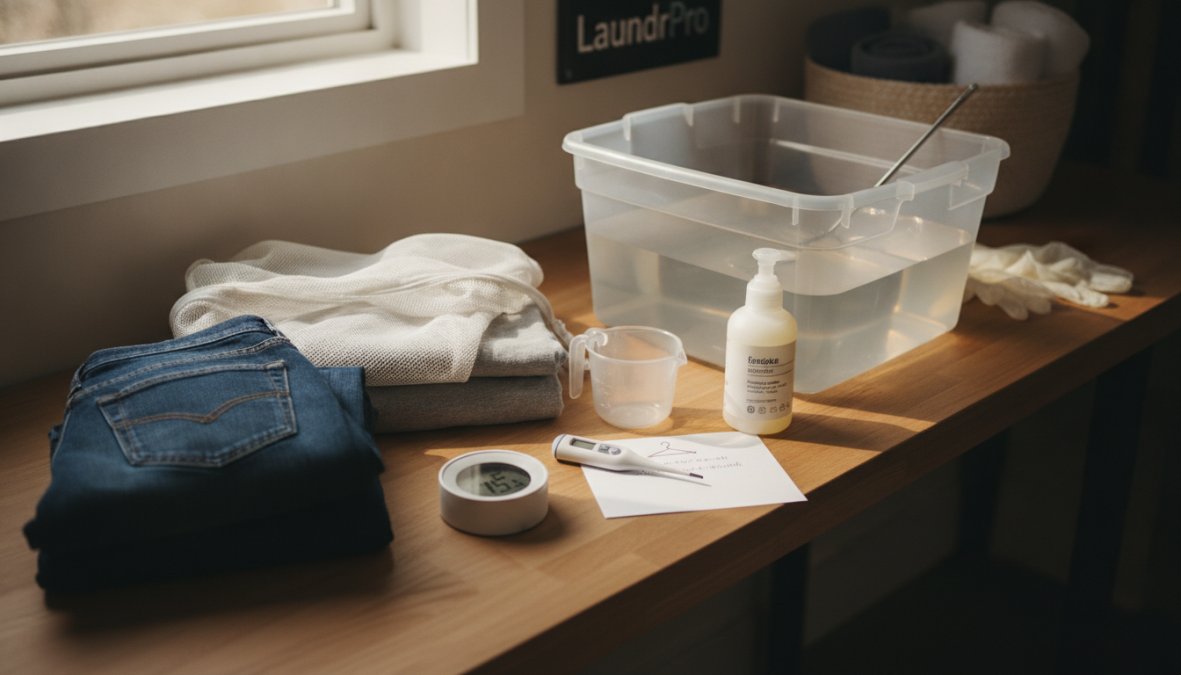
Sorting laundry by fabric type is the first line of defense against shrinkage.
Step 2: Use Cold Water Wash for Maximum Protection
Cold water is your most powerful shrinkage prevention tool. Cold water minimizes fiber relaxation because fibers don't swell as much in cool temperatures. Switching from warm to cold water can reduce shrinkage by 50-75% for most fabrics.
Fill your washing machine with cold water before adding clothes to ensure consistent temperature throughout the cycle. Cold water works with all detergent types, though some are formulated specifically for cold water use.
Step 3: Select a Delicate or Gentle Cycle
Washing machine agitation causes fibers to relax more than necessary. Delicate and gentle cycles reduce agitation speed and duration, minimizing fiber movement and shrinkage risk.
Standard cycles spin at 1000+ RPM and agitate for 8-12 minutes. Delicate cycles spin at 600-800 RPM and agitate for 4-6 minutes. Use the delicate cycle for all natural fiber items and gentle cycle for regular cotton items. Reserve standard or heavy-duty cycles only for towels and work clothes.
Step 4: Use Laundry Bags for Delicate Items
Mesh laundry bags create a protective barrier around delicate items, reducing agitation and friction that triggers shrinkage. Place delicate items like underwear, lightweight sweaters, and silk blouses inside a mesh bag before washing.
Step 5: Apply Proper Detergent Usage
Using the correct detergent amount matters because excess detergent leaves residue on fibers, making them stiffer and more prone to shrinking. Follow manufacturer dosage instructions exactly — modern detergents are highly concentrated, requiring only 1-2 tablespoons per load.
Choose detergent formulated for delicate fabrics or cold water washing. Avoid fabric softeners, which coat fibers with silicone that can trap moisture and accelerate shrinkage. Use wool dryer balls or vinegar in the rinse cycle instead.
| Prevention Method | Best For | Effectiveness |
|---|---|---|
| Cold water washing | All fabrics | Reduces shrinkage 50-75% |
| Delicate cycle | Natural fibers | Reduces shrinkage 30-50% |
| Laundry mesh bags | Delicate items | Reduces shrinkage 20-40% |
| Proper detergent dosage | All fabrics | Prevents additional shrinkage |
Does Tumble Drying Shrink Clothes? Heat Management Strategies
Heat is the primary cause of excessive shrinkage, making drying method and temperature absolutely critical.
Air Drying vs. Machine Drying
Air drying is the most effective shrinkage prevention method. When clothes dry without heat, fibers don't contract rapidly. Clothes dried on a line or laid flat typically shrink less than 1% even after fiber relaxation during washing.
Machine drying causes noticeable shrinkage in most natural fibers. A cotton shirt that hasn't shrunk during washing can easily shrink 2-3% in a single machine-drying cycle on medium heat.
In dry climates with good ventilation, most items dry within 4-8 hours. In humid climates or indoors, drying takes 12-24 hours. If you must use a machine dryer, use the lowest heat setting available and remove clothes while still slightly damp.
Low Heat Settings and Avoiding High Heat
Low heat drying significantly reduces shrinkage compared to medium or high heat while providing faster drying than air drying. Look for settings labeled "low," "delicate," or "air fluff." Never use high heat for any garment you want to preserve — it can permanently shrink clothes by 5-10% in a single cycle.
Clean the dryer lint trap before every load. A clogged trap forces hot air to recirculate, raising internal temperatures and increasing shrinkage risk.
How to Unshrink Clothes: Recovery Methods for Already-Shrunk Garments
If a garment has already shrunk, several methods can partially restore it to original size. These techniques work best on mild shrinkage (less than 5%).
The blocking method works for wool and cotton. Soak the shrunken garment in cool water with gentle detergent for 10-15 minutes. Gently squeeze out excess moisture without wringing. Lay it flat on a clean towel and carefully stretch it to original dimensions, then let it dry completely in this stretched position, typically 24-48 hours.
The hair conditioner soak is effective for wool and delicate items. Fill a basin with cool water and add generous hair conditioner. Soak the garment for 15-30 minutes, which relaxes fibers, then lay it flat and stretch to original dimensions while damp.
Recovery success depends on shrinkage severity and timing. Fresh shrinkage (within weeks) responds better because fibers haven't fully set in their new shape. Shrinkage months or years old is much harder to reverse.
Common Mistakes to Avoid When Preventing Shrinkage
Using warm or hot water is the biggest mistake. Warm water (above 80°F) causes noticeable shrinkage in most natural fibers within a single wash. Switching to cold water alone reduces shrinkage by 50% or more.
Ignoring care label instructions is equally costly. Overdrying clothes in the machine dryer is common — set a timer for 20-30 minutes instead of using "auto dry," and remove clothes while slightly damp.
Washing delicate items with heavy items creates unnecessary agitation. Always sort by fabric type and wash delicates separately. Using too much detergent leaves residue that affects fiber moisture response.
Energy-Saving and Eco-Friendly Benefits of Shrinkage Prevention
Air drying eliminates machine dryer energy consumption. Electric dryers use 3,000-5,000 watts per cycle. Air drying just half your laundry reduces household energy consumption by 5-10% annually.
Cold water washing reduces water heating energy significantly — washing exclusively in cold water can reduce household water heating energy by 10-15% annually.
Preventing shrinkage extends garment lifespan, reducing clothing manufacturing's environmental impact. A person losing 10-15 garments yearly to shrinkage spends $500-1,500 on replacements. Preventing shrinkage keeps clothes wearable longer.
Shrinkage doesn't have to be inevitable. By reading care labels, using cold water, selecting gentle cycles, and air drying when possible, you can prevent 80-90% of typical shrinkage. If you'd rather leave the guesswork to the experts, Laundrpro by JC Coin Laundry's pickup and delivery service handles every load with the right temperature and cycle for the fabric.
Frequently Asked Questions
What causes clothes to shrink in the wash?
Clothes shrink primarily due to heat and moisture exposure, which causes fibers to relax and contract. Natural fibers like cotton and wool are especially susceptible because their fibers absorb water and tighten as they dry. High wash temperatures and tumble drying accelerate this process significantly.
Can you unshrink clothes once they have shrunk?
Yes, partial recovery is possible for many garments. Soak the shrunken item in lukewarm water mixed with a gentle conditioner or fabric relaxer for 15-30 minutes to loosen the fibers, then gently stretch the garment to its original dimensions while still damp and lay it flat to air dry.
Does cold water prevent clothes from shrinking?
Cold water wash significantly reduces shrinkage risk by minimizing fiber relaxation and moisture absorption. While it doesn't eliminate shrinkage entirely, cold water combined with a gentle cycle and air drying offers maximum shrinkage prevention.
Which fabrics are most likely to shrink, and how should I care for them?
Natural fibers shrink most readily: 100% cotton can shrink 3-5%, wool up to 25% if not pre-shrunk, and linen moderately. Synthetic fabrics like polyester and nylon are more stable. For high-shrink fabrics, wash in cold water using a delicate cycle, use laundry mesh bags for extra protection, and air dry whenever possible.